Exclusive Offer: 7 Days Annapurna Base Camp Trek $405 Per Person

(Viber, Whatsapp, Cell) +977 9851022814 +977 9841451681

Experience
Pikey Peak Trek- Short Himalayan Trek 2026/2027

Pikey Peak Trek 2026 and 2027 - 11 Days

  • Duration 11 Days
  • Trip Grade Easy
  • Max Height 4065m.
  • Start From Kathmandu
  • Ends at Kathmandu
  • Group Size 1-15
  • Transportation Shared Bus, Jeep and Walk
  • Trip Meals Breakfast
  • Accommodation Teahouses & local lodges on trek, 3-star hotel in Kathmandu
  • Best Season Best Season March–May (Spring) | October–December (Autumn/Winter)

Pikey Peak Trek – Introduction

Pikey Peak Trek Nepal is one of the best short Himalayan treks, offering an unforgettable 11-day mountain adventure in Nepal. This scenic trek takes you to the summit of Pikey Peak (4,065 m / 13,336 ft), known for its breathtaking sunrise views over Mt. Everest and the surrounding Himalayan range.

Compared to the classic Everest Base Camp Trek, Pikey Peak Trek Nepal is shorter, quieter, and less demanding—yet the mountain views are equally spectacular, if not better. Along the trail, you’ll walk through lush rhododendron forests, stay in cozy teahouses, visit ancient Buddhist monasteries, and experience the authentic lifestyle of Sherpa communities.

This trek is ideal for beginners, families, photographers, and anyone seeking a genuine Himalayan experience without the challenges of a long expedition. The Pikey Peak Trek Nepal package includes accommodation, meals, an experienced guide, and porter support, ensuring a comfortable and rewarding journey.

Trip Highlights - Pikey Peak Trek

  • Watch a breathtaking sunrise over Mt. Everest (8,849 m) and other Himalayan giants from Pikey Peak (4,065 m)
  • Experience the Pikey Peak Trek Nepal on quiet, uncrowded trails away from the busy Everest Base Camp route
  • Travel to Phaplu by flight or drive, then trek through authentic Sherpa and Rai villages
  • Walk through beautiful rhododendron forests blooming in red, pink, and white during spring
  • Visit the historic Junbesi Monastery, a 400-year-old peaceful Buddhist site
  • Capture one of the best Himalayan sunrise views—without the crowds
  • Enjoy a gradual ascent on the Pikey Peak Trek Nepal, reducing the risk of altitude sickness
  • Taste local yak cheese, traditional Sherpa cuisine, and experience mountain lifestyle
  • Spot Himalayan wildlife like Red Pandas, Himalayan Tahr, and colorful pheasants
  • Flexible and customizable Pikey Peak Trek Nepal itineraries for couples, families, photographers, and solo travelers (2026 & 2027)

Trip Itinerary

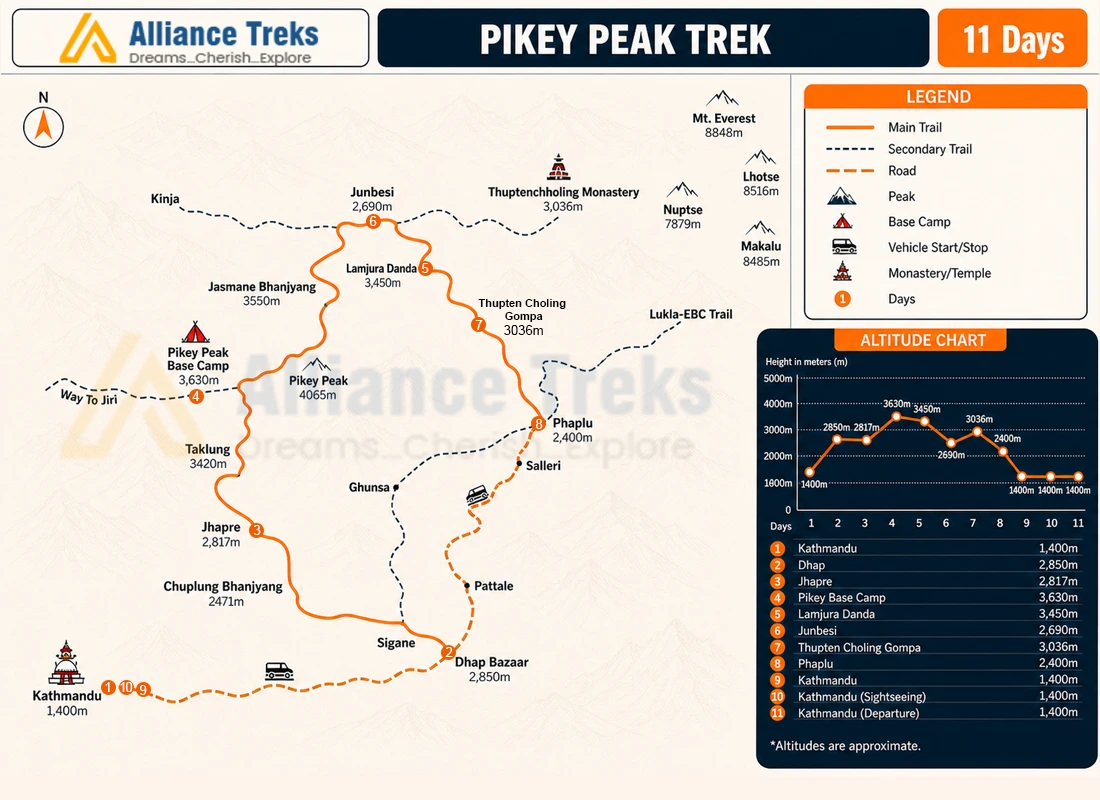
Day 1 Arrival in Kathmandu (1,400 m / 4,593 ft)

  • Highest Altitude 1400m
  • AccommodationHotel in Kathmandu
  • Included mealsBreakfast
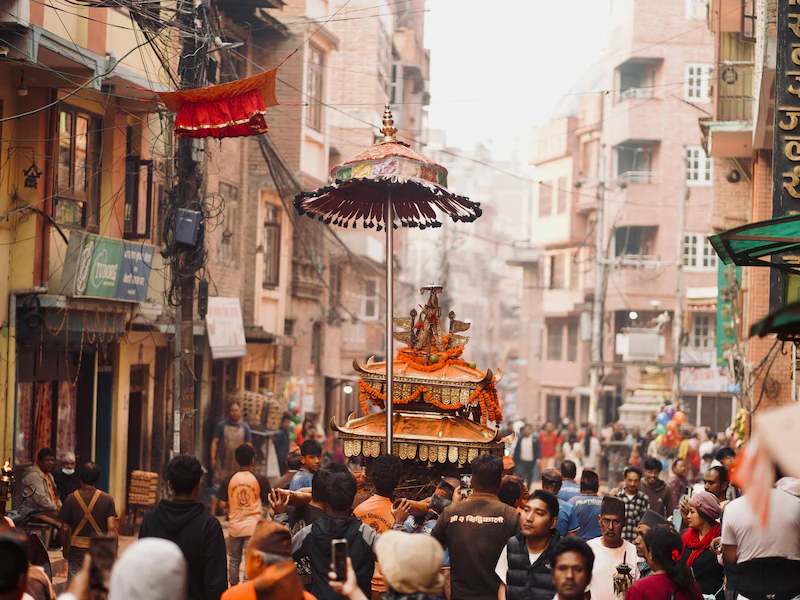
Your journey begins the moment you step off the plane at Tribhuvan International Airport. A company representative greets you in the arrivals hall and escorts you to your hotel in Thamel, Kathmandu's traveler hub. Use the afternoon to wander the colorful bazaars, browse trekking gear shops if you have last-minute needs, and soak in the energy of the city. In the evening, your lead guide holds a detailed pre-trek briefing — covering the route, acclimatization strategy, safety protocols, and what to expect at altitude. Share any health concerns now. A welcome dinner with the team rounds off the night. Tip: Confirm your passport, Nepal visa, and travel insurance documents tonight. Get a good night's sleep — the drive tomorrow is long.

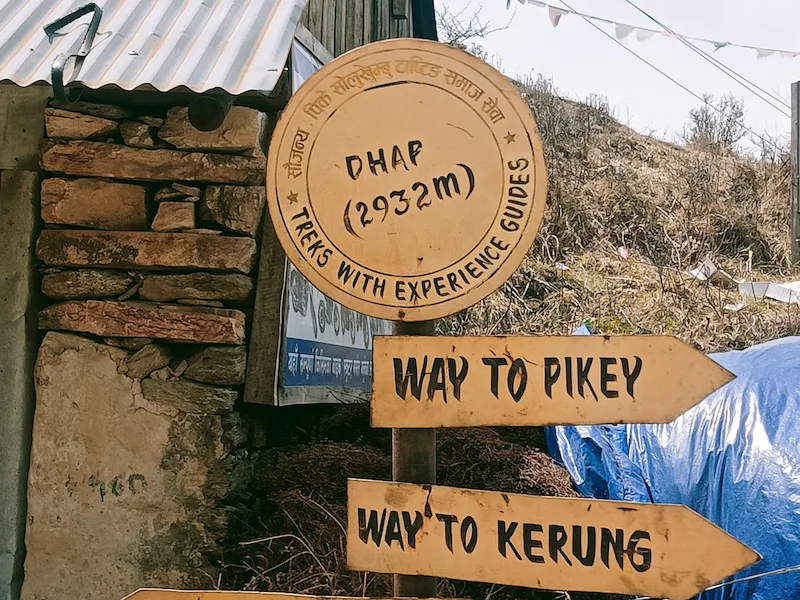
Day 2 Drive from Kathmandu to Dhap (2,850m / 9,350 ft)

  • Highest Altitude2850 m
  • AccommodationTeahouse / Lodge
  • Included mealsBreakfast
After an early breakfast, board a shared 4WD jeep and head east out of the capital. The road cuts through the Kathmandu Valley rim, descending into the Terai plains before climbing steeply into the Solu hills. As the asphalt gives way to rough dirt road, sweeping views of terraced farmland, chestnut forests, and distant white peaks emerge. Small roadside villages offer a glimpse of rural Nepali life — stone-walled farmhouses, women carrying dokos, and children waving from the trail. Dhap is a quiet hilltop settlement encircling a turquoise reservoir dam. Settle in, enjoy a warm meal at the lodge, and let the altitude (2,850 m / 9,350 ft) begin its gentle work of preparation. Tip: Bring a neck pillow and snacks for the jeep — the road gets bumpy in the final stretch. The scenery more than compensates.

Day 3 Dhap to Jhapre (2817 m)

  • Walking Distance6 Hrs
  • Highest Altitude2817 m
  • AccommodationTeahouse / Lodge
  • Included mealsBreakfast
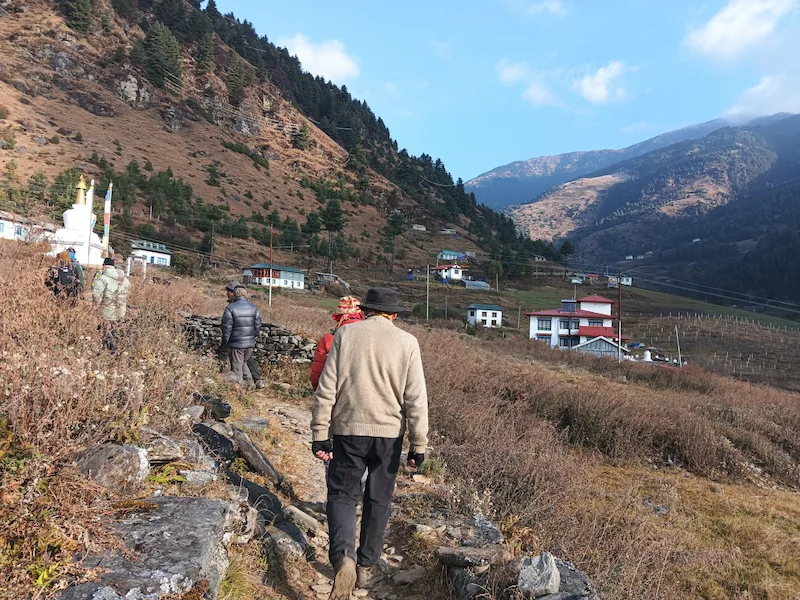
The first trekking day begins with crisp mountain air and an unhurried breakfast. The trail descends gently from Dhap before weaving through a patchwork of cultivated terraces, oak and rhododendron forest, and quiet hamlets. Mani walls carved with Buddhist prayers appear at intervals, marking the beginning of Sherpa territory. The path is clear and rarely busy — you may share the trail only with the occasional herder moving livestock to higher grazing grounds. Arriving in Jhapre, a compact Sherpa-Tamang village nestled on a ridge, you are rewarded with your first glimpse of snowy peaks peering above the forest. Explore the small monastery near the village centre before a hot meal and restful night.

Day 4 Jhapre to Pikey Base Camp (3,630 m)

  • Walking Distance6-7 hrs
  • Highest Altitude3630 m
  • AccommodationTea House
  • Included mealsBreakfast
The day's trail climbs steadily, transitioning from mixed village trails into denser forest as altitude rises. You pass through Lhamuje Danda, a high ridge with increasingly dramatic mountain vistas, and the small settlement of Bhulbhule before the final ascent to base camp. The forest thins above 3,200 m, opening to vast alpine meadows where yaks graze freely. Prayer flags strung between boulders signal the sacred character of the terrain. Pikey Base Camp sits at 3,630 m — a cluster of rustic teahouses surrounded by an enormous amphitheatre of peaks. The summit of Pikey is visible above, its silhouette unmistakable against the evening sky. Sleep early: tomorrow's 3 AM alarm is your most important one.

Day 5 Summit Pikey Peak (4,065m / 13,337 ft) & Trek to Lamjura Danda (3450 m)

  • Walking Distance5-6 hrs
  • Highest Altitude4065 m
  • AccommodationTeahouse/ Lodge
  • Included mealsBreakfast

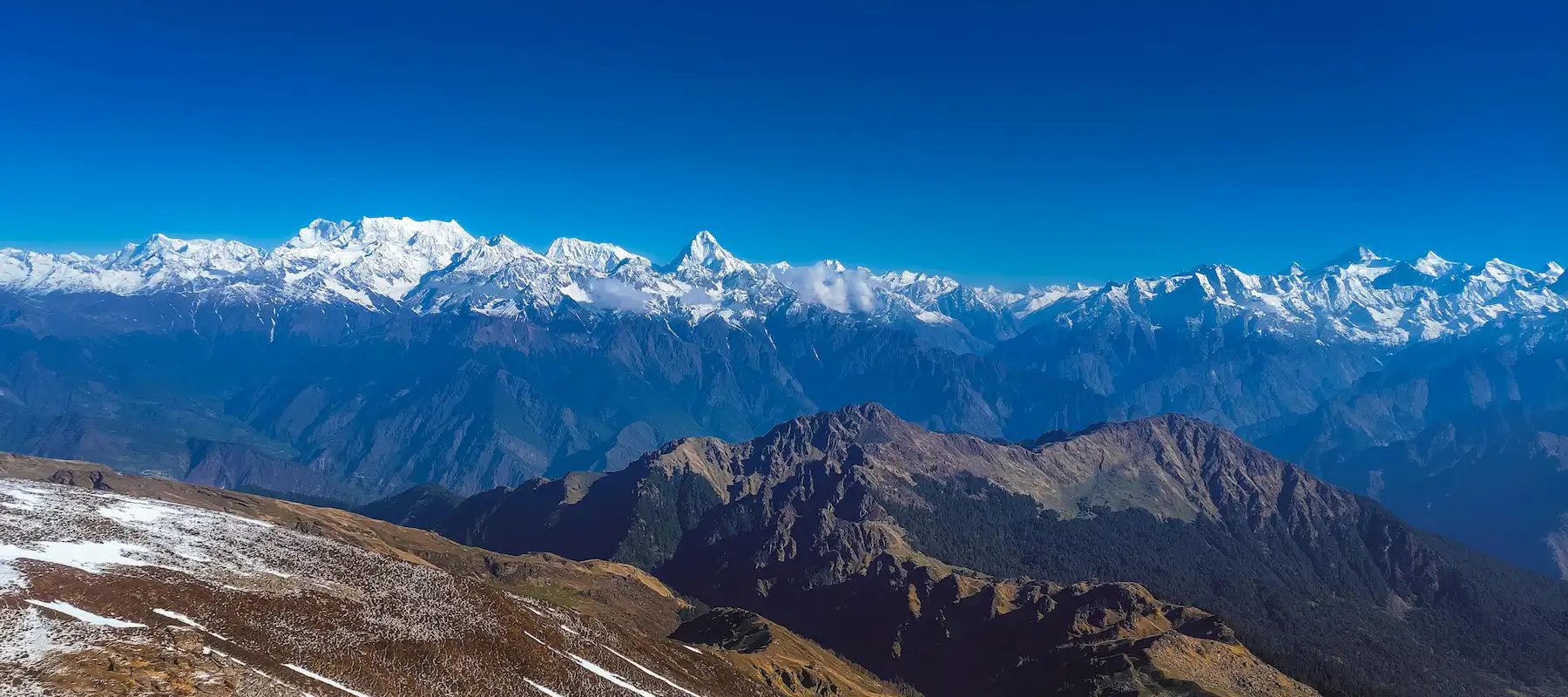
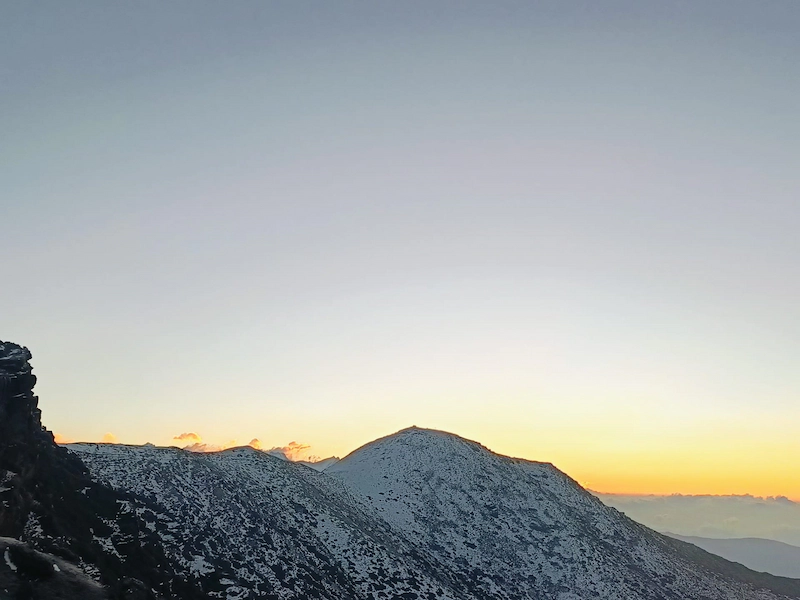
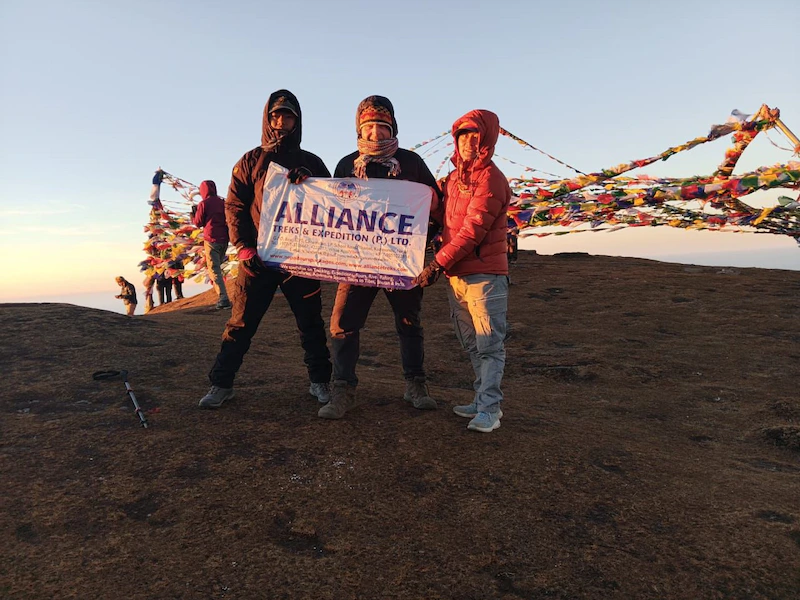
The alarm rings at 3:00 AM. Under a sky blazing with stars, you strap on your headlamp and set off on the 5 km summit push. The trail is steep and rocky in places, but your guide leads a measured pace — no rushing. As you gain elevation, temperatures plunge and the wind picks up. Around 5,500 ft of vertical later, the summit of Pikey Peak (4,065 m / 13,340 ft) materialises. Then, at precisely the right moment, a thin orange band spreads across the eastern horizon. The first rays illuminate the summit of Everest — a golden triangle towering above all else. Then Lhotse, Makalu, Kanchenjunga, Thamserku, Nuptse, and Kangtega ignite one by one. Few sunrise experiences on earth rival this. After absorbing the moment, descend to base camp for a well-earned hot breakfast, then continue through alpine meadows and pine forest to Lamjura Danda for the night.

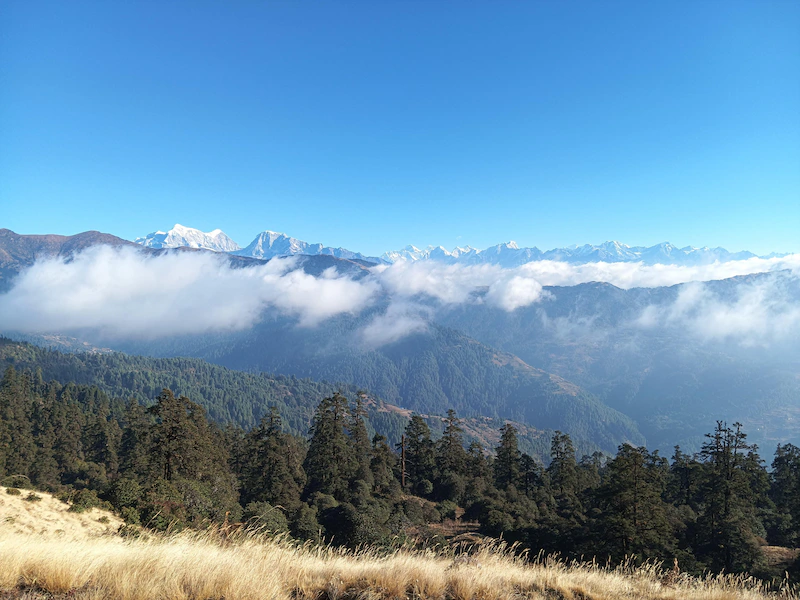
The summit views encompass Everest (8,849 m), Lhotse (8,516 m), Kanchenjunga (8,586 m), Makalu (8,463 m), Nuptse, Pumori, Kangtega & Thamserku.
Day 6 Lamjura Danda to Junbesi (2690 m)

  • Walking Distance3-4 hrs
  • Highest Altitude2690 m
  • AccommodationTeahouse / Lodge
  • Included mealsBreakfast
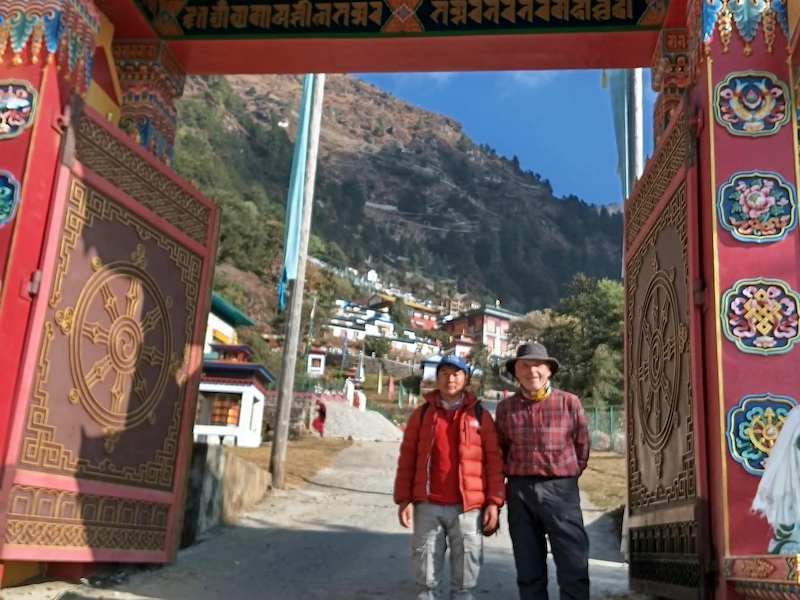
A relatively gentle day follows the exertions of summit day. The trail descends from Lamjura Danda along forested ridgelines, dropping through small hamlets and past stone-walled potato fields. A shortcut route via Jase village descends steeply to Traktor, where the path intersects the historic Jiri–Everest Base Camp trail walked by Hillary and Tenzing before the Lukla airstrip existed. From here, a pleasant walk leads to Junbesi, one of the most charming villages in the Solu Khumbu region. Junbesi sits in a wide valley sheltered by forested hills, its traditional Sherpa architecture largely intact. Explore the village lanes, chat with locals, and rest your legs — you've earned it.

Day 7 Junbesi: Visit Thupten Choling Gompa (3036 m)

  • Highest Altitude3036 m
  • AccommodationTeahouse / Lodge
  • Included mealsBreakfast

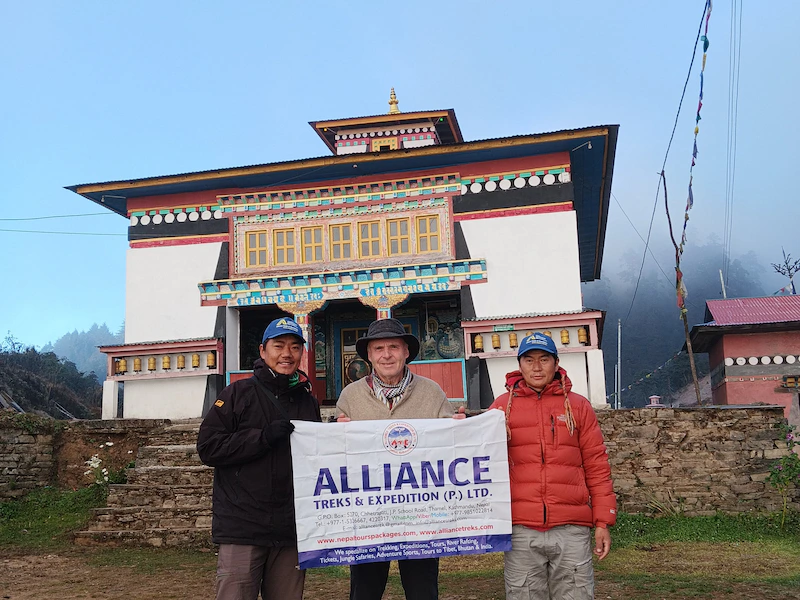
This is one of the most spiritually rewarding days of the entire trek. After a slow morning breakfast, walk uphill from Junbesi through a mossy forest trail to reach Thupten Choling Gompa, one of the most significant Tibetan Buddhist monasteries in the entire Solu Khumbu region. Founded by the late Trulshik Rinpoche, the monastery complex houses hundreds of monks, nuns, and elderly Tibetan refugees who fled the plateau decades ago. Wander the courtyards, spin the copper prayer wheels, and listen to the deep, rhythmic chanting echoing through ancient prayer halls adorned with thangka paintings and butter lamps. The monastery commands sweeping views over the Junbesi valley. Return to the village by afternoon, rest, and spend the evening over apple chang (local brew) or a pot of butter tea with your hosts.

Cultural note: Remove shoes before entering prayer halls, walk clockwise around stupas and mani walls, and always ask before photographing monks.
Day 8 Trek Junbesi - Phaplu (2400 m)

  • Walking Distance4-5 hrs
  • Highest Altitude2400 m
  • AccommodationLocal Lodge
  • Included mealsBreakfast
The final trekking day winds gently downward through a landscape that feels increasingly lush as you lose altitude. The path drops to the Junbesi Khola river, crosses a swaying steel suspension bridge at Beni Ghat, and then climbs briefly through terraced fields before easing into Phaplu. A modest but historically important town, Phaplu is home to one of the region's few airstrips — constructed with Swiss aid funding in the 1970s to provide medical access to the remote Solu district. Today it remains a quiet gateway. Reward yourself with a hot shower (available at most lodges), a multi-course meal, and an evening of shared stories with fellow trekkers or your guide. You've covered the full Pikey Peak circuit on foot. Note: Phaplu has a small airstrip. A charter flight back to Kathmandu can be arranged at additional cost if you prefer not to do the full return drive.

Day 9 Phaplu to Kathmandu

  • Walking Distance8 hrs drive
  • Highest Altitude1400 m
  • AccommodationHotel in Kathmandu
  • Included mealsBreakfast
Rise early for the long but scenic drive back to the capital. The jeep retraces its path through the Solu hills, pausing at roadside teashops for chai and snacks. Use the drive to download photos, write journal notes, or simply gaze out as Nepal's countryside unspools — monastery-capped ridges, river gorges, terraced farming communities, and the gentle lowland bazaars on the edge of the valley. Arriving in Kathmandu by late afternoon, you check back into your hotel. The evening is yours — celebrate the successful summit with dinner at one of Thamel's many excellent restaurants, from traditional Nepali daal bhaat to wood-fired pizza.

Day 10 Optional - Kathmandu Valley Sightseeing

  • AccommodationHotel in Kathmandu
  • Included mealsBreakfast
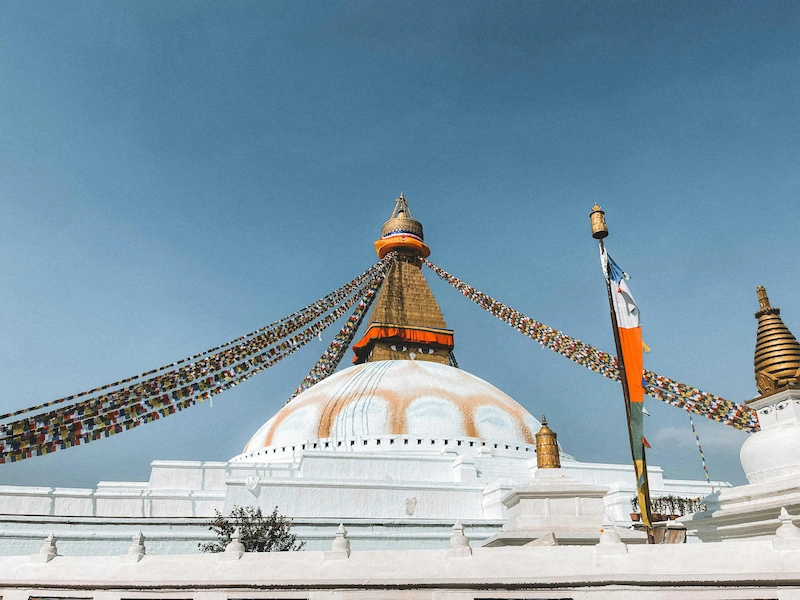
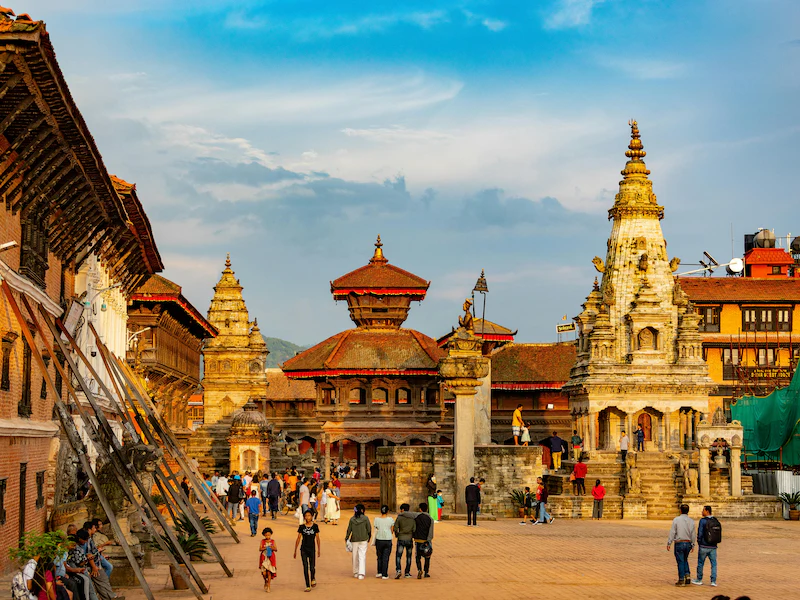
An optional but rewarding buffer day to explore the Kathmandu Valley's extraordinary cultural heritage. Begin at Boudhanath Stupa, one of the largest Buddhist stupas in the world, its all-seeing eyes gazing serenely over the city. Continue to Pashupatinath Temple on the banks of the Bagmati River — one of Hinduism's holiest sites, where cremations and sadhus draped in ochre make for a deeply humbling scene. Swoyambhunath (the Monkey Temple) offers sweeping views over the smoggy valley and a riot of resident rhesus macaques. Afternoon visits to Patan Durbar Square and Bhaktapur reveal the finest Newari craftsmanship in Nepal: wood-carved windows, gilded pagodas, and centuries-old courtyards largely unchanged since the medieval era.

Day 11 Final Departure from Kathmandu

  • Highest Altitude1400 m
  • AccommodationHotel in Kathmandu
  • Included mealsBreakfast
The final morning. Depending on your flight time, you may have a few hours to pick up last-minute souvenirs — pashmina shawls, Tibetan singing bowls, hand-crafted thangka paintings, or a bag of single-origin Himalayan coffee. Your team arranges a timely airport transfer. At the airport, clear customs, reflect on the route you've walked: from the chaotic streets of Kathmandu to the silent summit of Pikey Peak, from teahouses lit by butter lamps to the slow sunrise turning Everest gold. The mountains stay with you. Safe travels.

What's Included in Pikey Peak Trek

  • Airport transfers (arrival and departure) in Kathmandu by private vehicle
  • 2 nights' accommodation in deluxe hotel in Kathmandu (Day 1 & Day 10) with breakfast
  • Kathmandu–Phaplu return flight tickets (or private vehicle on road option)
  • All trekking accommodation in teahouses/lodges
  • Breakfast as per itinerary
  • An experienced, licensed, English-speaking Government-registered trekking guide
  • All government-required trekking permits (TIMS Card & Conservation Area Permit)
  • All applicable government taxes and service charges

What's Excluded in Pikey Peak Trek

  • International flights to/from Kathmandu — not included
  • Nepal Visa fee (payable on arrival at Kathmandu airport — currently USD 30 for 15 days)
  • Personal trekking gear, clothing, sleeping bag, and trekking poles (rental available in Kathmandu)
  • Travel insurance covering trekking up to 5,000 m altitude with helicopter rescue — mandatory & not included
  •  Alcoholic beverages, soft drinks, mineral water, hot drinks (tea/coffee) at teahouses — personal expense
  • Tips and gratuities for guides and porters (customary and appreciated)
  • Optional activities, personal shopping, and sightseeing in Kathmandu
  • Battery charging fees at teahouses (typically NPR 100–300 per device)
  • Hot shower fees at teahouses (typically NPR 100–200)
  • Personal expenses: phone calls, laundry, medical costs
  • Any costs arising from flight delays, cancellations, or natural events beyond our control
  • Porter charges
  • Lunch, Dinner or other extra foods
 
From US$ 1350 US$ 1179 (Price varies by group size)

We Offer Group Discount

No. of people Price P.P
1 US$ 1179
2 to 5 US$ 729
6 to 10 US$ 605
11 - Above US$ 559

What is the Pikey Peak Trek Nepal?

The Pikey Peak Trek Nepal is an 11-day trekking journey through one of the country’s most सुंदर and least-visited regions — the Solukhumbu valley in eastern Nepal. This scenic trail takes you through lush rhododendron forests, high ridgelines, and traditional Sherpa villages before reaching the summit of Pikey Peak (4,065 m / 13,336 ft).

From the top, on a clear morning, you can witness panoramic views of Everest and several of the world’s highest mountains rising above the clouds. The sunrise from Pikey Peak is often considered one of the best in Nepal — a moment that stays with you long after the trek ends.

Why Pikey Peak is the Best Sunrise Viewpoint in Everest Region

Sir Edmund Hillary himself claimed that the view from Pikey Peak is the finest in Nepal. From the summit, you’ll witness a 360° Himalayan panorama, including Everest glowing golden at sunrise—making the Pikey Peak Trek / Best Sunrise Viewpoint in Everest Region truly unforgettable.

Why Choose Pikey Peak Trek Nepal Instead of Everest Base Camp?

Many travelers visiting Nepal dream of Everest and head straight to the Everest Base Camp Trek. However, that route is crowded, longer (14–16 days), and physically more demanding.

The Pikey Peak Trek Nepal offers a quieter and shorter alternative with equally breathtaking views of Everest and surrounding peaks. The trails are peaceful, the pace is more relaxed, and the experience feels far more personal.

You’ll also discover authentic mountain culture. Villages along the Pikey Peak Trek Nepal route remain untouched by mass tourism, allowing you to experience real Sherpa life — from local food to traditions and daily routines.

What Will You See and Experience on Pikey Peak Trek Nepal?

Every day on the Pikey Peak Trek Nepal brings something new. You’ll walk through forests that burst into color during spring, with rhododendrons blooming in red, pink, and white. You’ll cross suspension bridges, follow scenic ridgelines, and enjoy sweeping Himalayan views.

In Junbesi, visit a centuries-old Buddhist monastery and observe peaceful morning prayers. You can also stop at a local cheese factory to taste fresh yak cheese made in the mountains.

The highlight is summit day. Before dawn, you’ll hike to the top and watch the sunrise over Everest — one of the most unforgettable experiences of the entire Pikey Peak Trek Nepal.

How Difficult is Pikey Peak Trek Nepal?

The Pikey Peak Trek Nepal is considered a moderate trek and is suitable for beginners. You don’t need prior trekking experience, but a basic level of fitness is important.

The trail gains altitude gradually, allowing your body to adjust comfortably. With a maximum elevation of 4,065 m, the risk of severe altitude sickness is lower compared to higher treks.

This trek is ideal for beginners, families, photographers, and travelers who want a rewarding Himalayan experience without extreme difficulty.

Best Time for Pikey Peak Trek Nepal

The best time for the Pikey Peak Trek Nepal is during spring (March to May) and autumn to early winter (October to December).

Spring offers blooming rhododendron forests, pleasant temperatures, and colorful landscapes — perfect for photography.

Autumn and early winter bring crystal-clear skies and the best mountain views of the year. Although nights can be colder, especially from November, the crisp air and occasional snowfall create a stunning trekking environment.

What’s Included in Pikey Peak Trek Nepal Package?

All Pikey Peak Trek Nepal packages for 2026 and 2027 are fully inclusive for a hassle-free experience.

You’ll be accompanied by a professional, government-licensed English-speaking guide throughout the journey. Accommodation is arranged in comfortable teahouses during the trek, with all meals (breakfast, lunch, and dinner) included.

In Kathmandu, you’ll stay in a 3-star hotel. Porter services are available to carry your luggage, and all necessary permits and logistics are handled for you.

The Pikey Peak Trek Nepal can be customized as a private trip for couples and families or joined as a group departure.

Permits Required:

TIMS Card- Trekkers’ Information Management System card — mandatory for all trekking routes in Nepal. Obtainable at Nepal Tourism Board, Kathmandu.
Local Area Permit Required for entry into the Solukhumbu local trekking zone. Issued at the checkpoint en route; managed by the local municipality to regulate visitor numbers.
Note: This itinerary does not pass through Sagarmatha National Park, so no national park entry fee applies. If you extend into the park buffer zone, an additional permit is needed.

You Should Know Before Travel Expand All Collapse All

The two best seasons are Spring (March to May) and Autumn/Early Winter (October to December). Spring offers blooming rhododendrons and excellent visibility. Autumn brings crystal-clear skies and the sharpest Himalayan panoramas. Winter (December–February) is possible but cold with potential snowfall. Monsoon (June–September) is not recommended due to leeches and reduced visibility.

The Pikey Peak Trek is rated Moderate and is one of the best Himalayan treks for beginners. The maximum altitude of 4,065 m is well below the altitude threshold at which serious AMS (Acute Mountain Sickness) typically sets in. Good physical fitness, regular aerobic exercise beforehand, and proper hydration during the trek are sufficient preparation. No technical climbing skills are required.

You will need a TIMS Card (Trekkers' Information Management System) and a Gaurishankar Conservation Area Permit. Your trekking agency will arrange both. Foreign nationals require these permits; SAARC nationals receive concessional rates. Permit fees are not typically included in the trek cost — please check your specific package.

The risk is comparatively low since the highest point is 4,065 m and altitude gain is gradual across 11 days. However, all trekkers should stay well hydrated, ascend slowly, and carry Diamox (acetazolamide) as a precaution if advised by their physician. Symptoms to watch include persistent headache, nausea, dizziness, or shortness of breath. Helicopter rescue is available if required, and all guides hold first aid certification.

Yes — significantly. The Pikey Peak Trek Nepal is shorter (11 days vs 14–16 days), lower in maximum altitude (4,065 m vs 5,364 m), far less crowded, and provides comparable or even superior panoramic Himalayan views at sunrise. It passes through authentic Sherpa villages off the tourist mainstream. It is often recommended as a perfect alternative or warm-up to higher Himalayan treks.

While theoretically possible for experienced trekkers, hiring a licensed guide is strongly recommended and sometimes required for permit purposes. Guides provide invaluable cultural interpretation, safety support, and local navigation expertise on remote trails. Supporting local guides also directly benefits Nepali mountain communities.

Accommodation is in local teahouses and trekking lodges throughout the route. These range from basic but clean private rooms with shared bathrooms in remote areas to slightly more comfortable lodges in Junbesi and Salleri. In Kathmandu, comfortable 3-star hotels are provided. Sleeping bags are recommended for cold nights at altitude.

Essential items include: layered thermal clothing, a down jacket, waterproof trekking boots (broken in), rain gear, trekking poles, UV-protection sunglasses, a quality headtorch with extra batteries, sun cream (SPF 50+), a refillable water bottle or filter, a personal first aid kit, and a camera with extra memory cards for sunrise photography at the summit. A detailed packing list is provided upon booking.

Alliance Treks & Expedition Pvt. Ltd. Once is not enough for naturally and culturally Himalayas
Contact us